


During DARZALEX FASPRO®
treatment
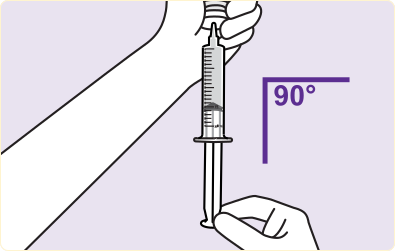
Your healthcare provider will prepare the syringe.

Your healthcare provider will determine where to inject and prepare the chosen area, rotating injection sites in the stomach each time you receive an injection.
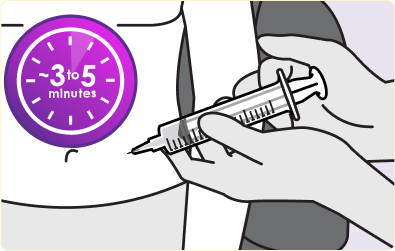
The injection takes about 3 to 5 minutes to be given.* The medicine is injected into the subcutaneous tissue (the tissue under the skin) of the stomach.
*This refers to the injection administration time and does not account for all aspects of treatment.

Your healthcare provider may want you to remain in the office to watch for any side effects, serious allergic reactions, and other severe injection-related reactions. Serious allergic reactions and reactions due to release of certain substances by your body (systemic) that can lead to death can happen with DARZALEX FASPRO®. Your healthcare provider may temporarily stop or completely stop treatment with DARZALEX FASPRO® if you have a serious reaction.
Tell your healthcare provider or get medical help right away if you get any of these symptoms during or after an injection of DARZALEX FASPRO®.
- Shortness of breath or trouble breathing
- Dizziness or lightheadedness (hypotension)
- Cough
- Wheezing
- Heart beating faster than usual
- Low oxygen in the blood (hypoxia)
- Throat tightness or irritation
- Runny or stuffy nose
- Headache
- Itching
- High blood pressure
- Eye pain
- Nausea
- Vomiting
- Chills
- Fever
- Chest pain
- Blurred vision
Skin reactions at or near the injection site (local), including injection site reactions, can happen with DARZALEX FASPRO®. Symptoms may include:
- Itching
- Swelling
- Bruising
- Pain
- Rash
- Bleeding
- Redness of the skin
These reactions sometimes happen more than 24 hours after an injection of DARZALEX FASPRO®.
On average, the first DARZALEX® infusion may last about 7 hours. Future infusions will usually go faster. For your infusions, you may want to bring the following items with you:

Headphones, a music player, a tablet, crossword puzzles, or a book

Blanket and pillow to help you get comfortable in case you want to take a nap

Snacks and drinks for the day. Check with the facility to see if bringing food is okay
Pay attention to how you feel. Let your care team know about any discomfort, even if it's just a cough, runny nose, or throat discomfort during or after treatment and especially during your first infusion. You could be having a reaction to treatment with DARZALEX®.
DARZALEX® may cause serious reactions, including infusion-related reactions. Infusion-related reactions are common with DARZALEX®. Serious allergic reactions and reactions due to release of certain substances by your body (systemic) that can lead to death can happen with DARZALEX®. Your healthcare provider may temporarily stop your infusion or completely stop treatment with DARZALEX® if you have infusion-related reactions. Get medical help right away if you get any of the following infusion-related reactions.
Infusion-related reaction symptoms may include:
- Shortness of breath or trouble breathing
- Dizziness or lightheadedness (hypotension)
- Cough
- Wheezing
- Heart beating faster than usual
- Low oxygen in the blood (hypoxia)
- Throat tightness or irritation
- Runny or stuffy nose
- Headache
- Itching
- High blood pressure
- Eye pain
- Nausea
- Vomiting
- Chills
- Fever
- Chest discomfort
- Blurred vision
It is important to tell your doctor or nurse about a reaction as soon as possible so they can put an appropriate plan in place.
Infusion-related reactions with DARZALEX® can be severe. About half the people treated with DARZALEX® experience an infusion-related reaction. This is most likely to happen during the first infusion and less likely with future infusions.
If you do have an infusion-related reaction, your healthcare professional may temporarily stop your infusion or completely stop treatment with DARZALEX®.